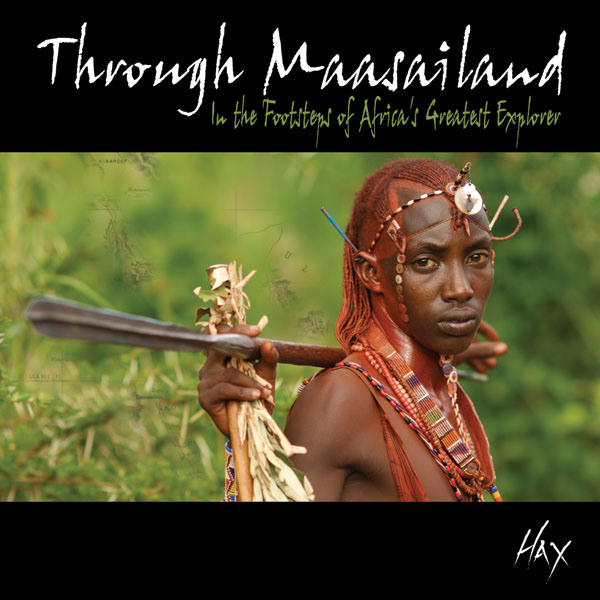
Through Maasailand: In the Footsteps of Africa's Greatest Explorer
A photographic and written retracing of explorer Joseph Thomson's 1883 expedition across East Africa, resulting in a book and a documentary broadcast on the History Channel.
280x280mm 208 pages
"Treat the earth well. It was not given to you by your father; it was loaned to you by your children."
(Old Maasai proverb)
(Old Maasai proverb)
The tribes who occupy East Africa have existed in harmony with the environment for many thousands of years. But the 1890s brought colonial influence from the Germans and the British.
The changes these influences brought have had a direct effect on land use, population growth, and East African wildlife. Indigenous cultures are now forced to seek alternative methods of subsistence. Huge tracts of pastoral land are being lost to smallholding cultivation, and wildlife migratory routes are diminishing. All of this has a massive impact on the remaining wild areas, leaving them with a non-sustainable level of wildlife population.
In the belief that an integral process in understanding and saving the environment is fundamental education, I intend to illustrate these impacts through a collection of photographs and the making of a narrative video documentary to accompany them. In doing so, it will help us all witness key environmental issues and come closer to realising that one man's environment is not only his responsibility, but also that of us all.
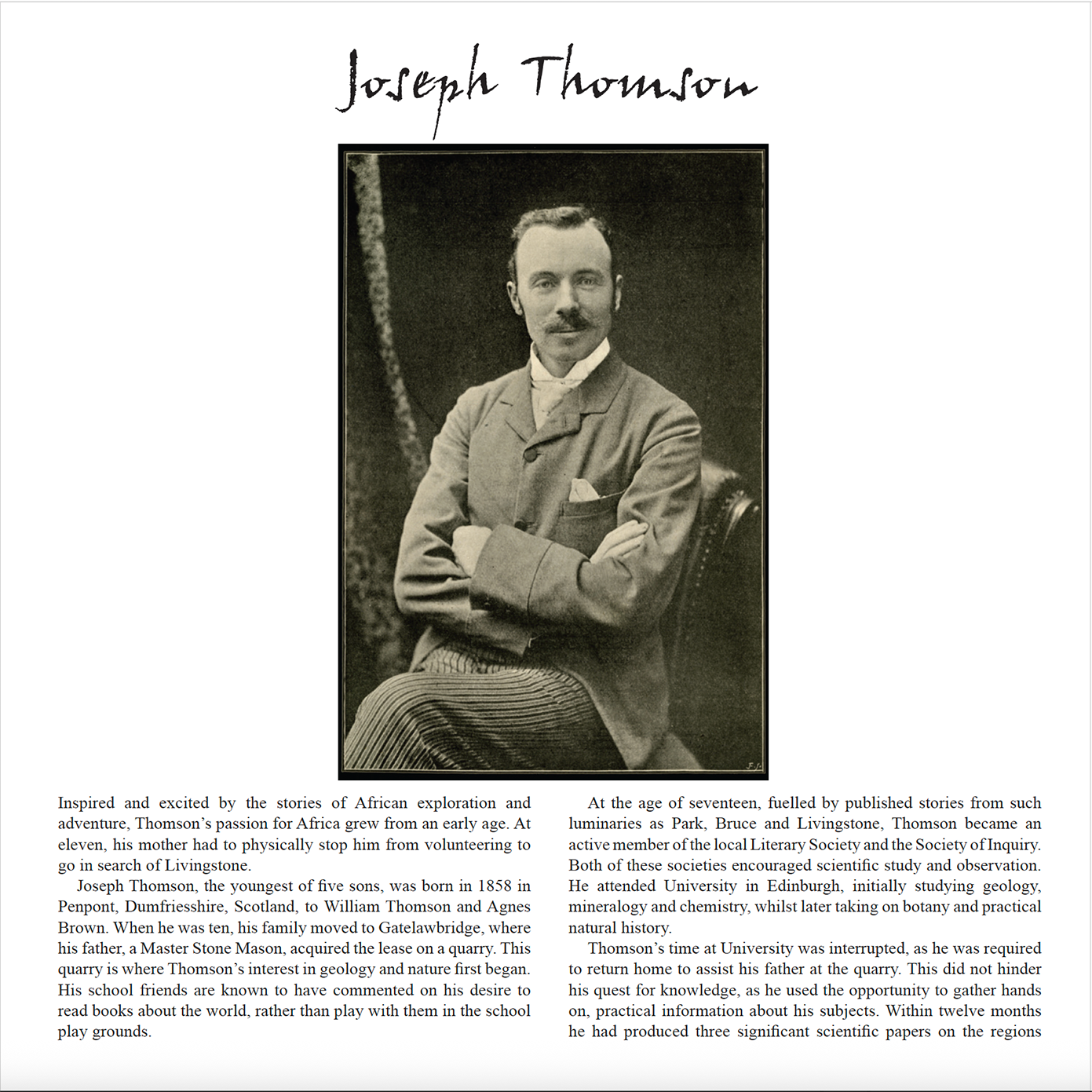
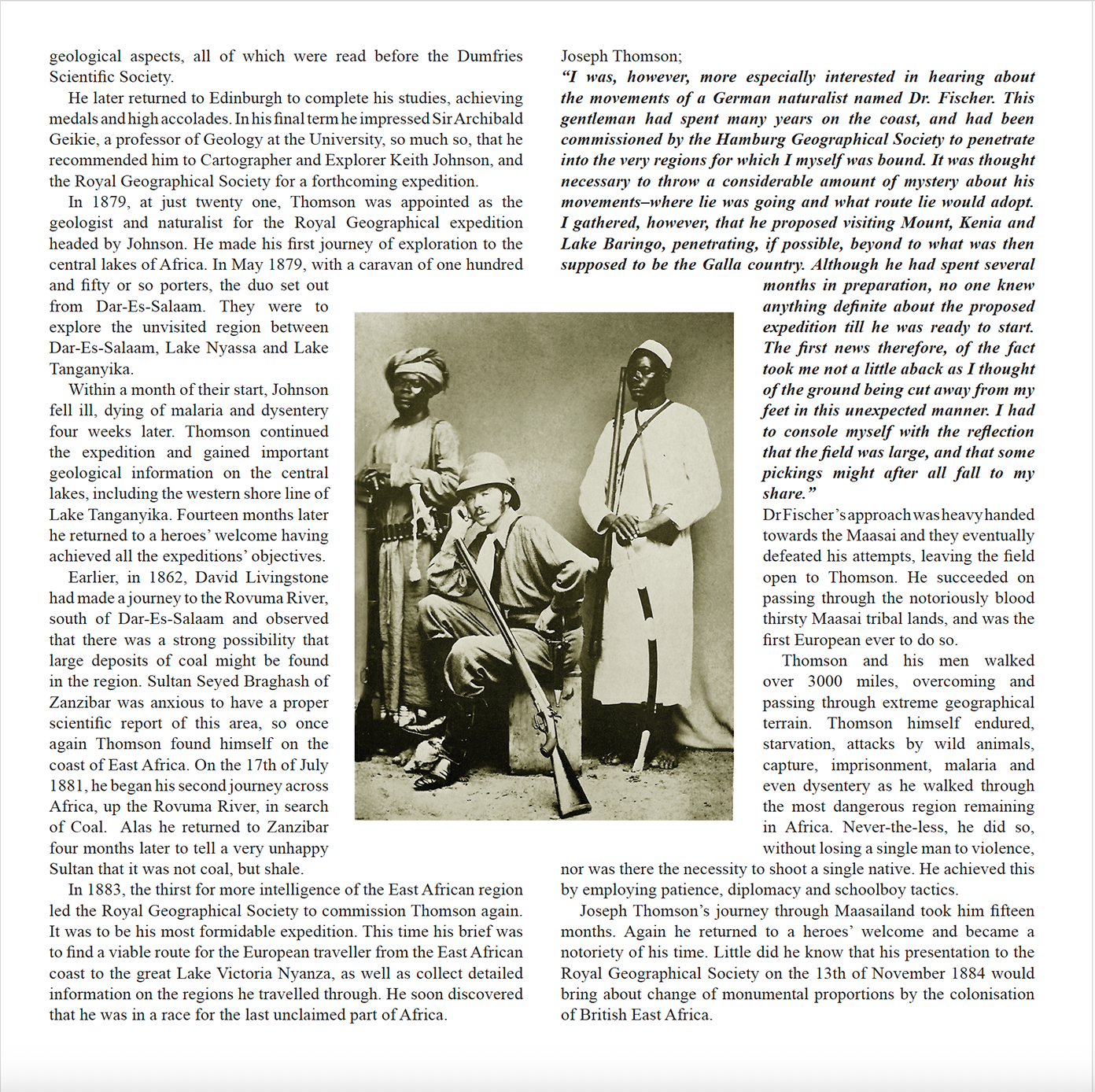
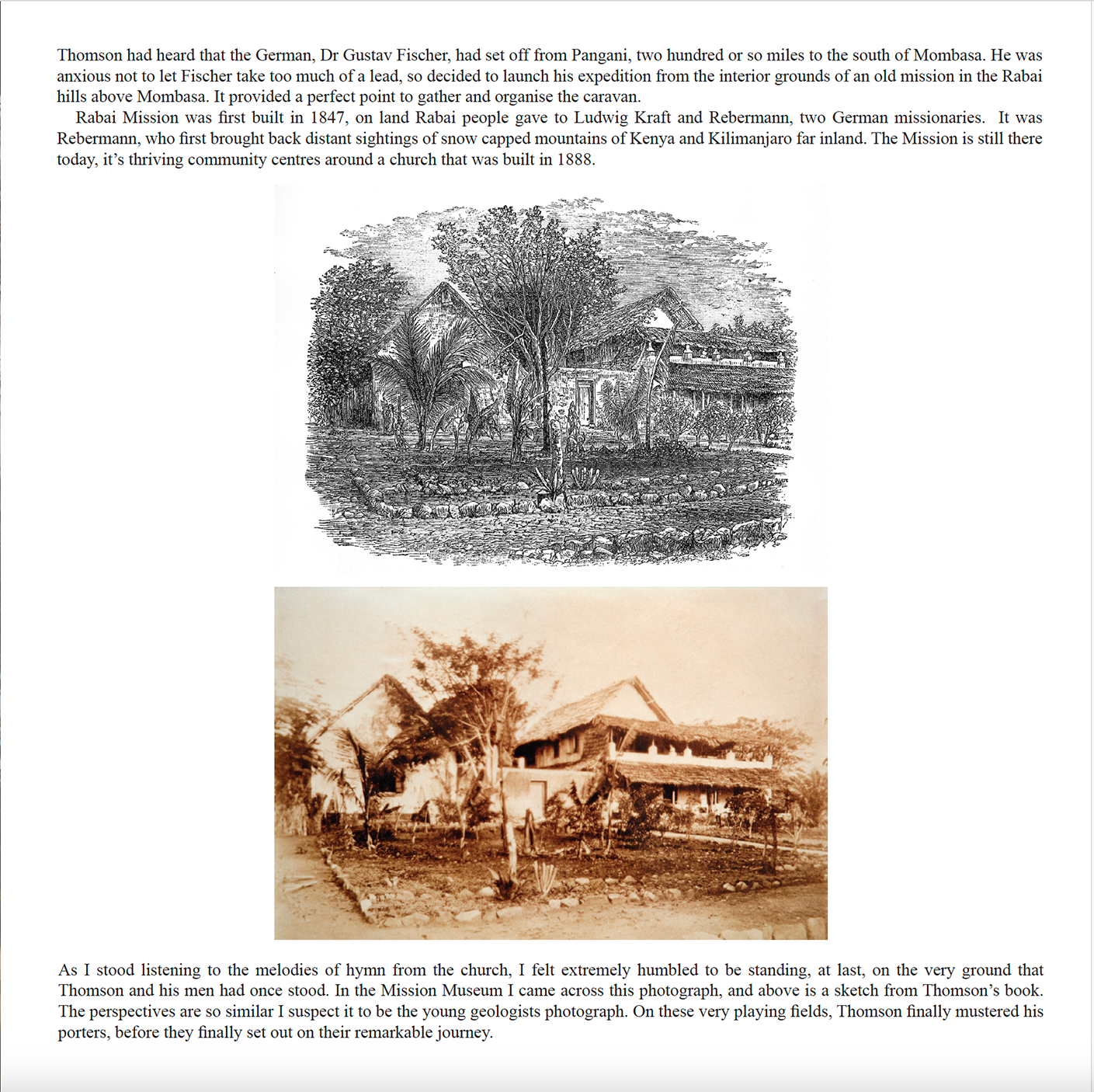
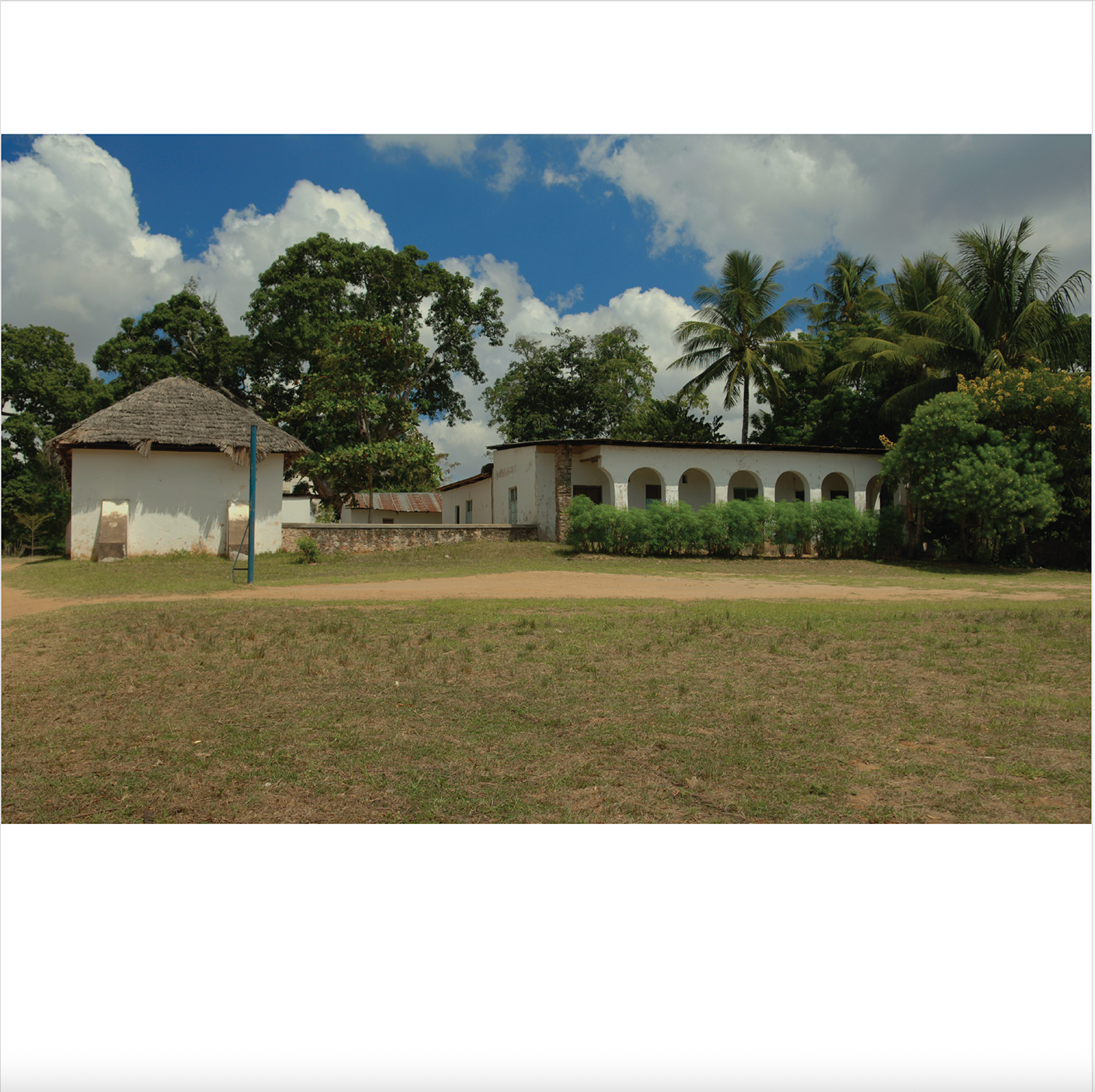
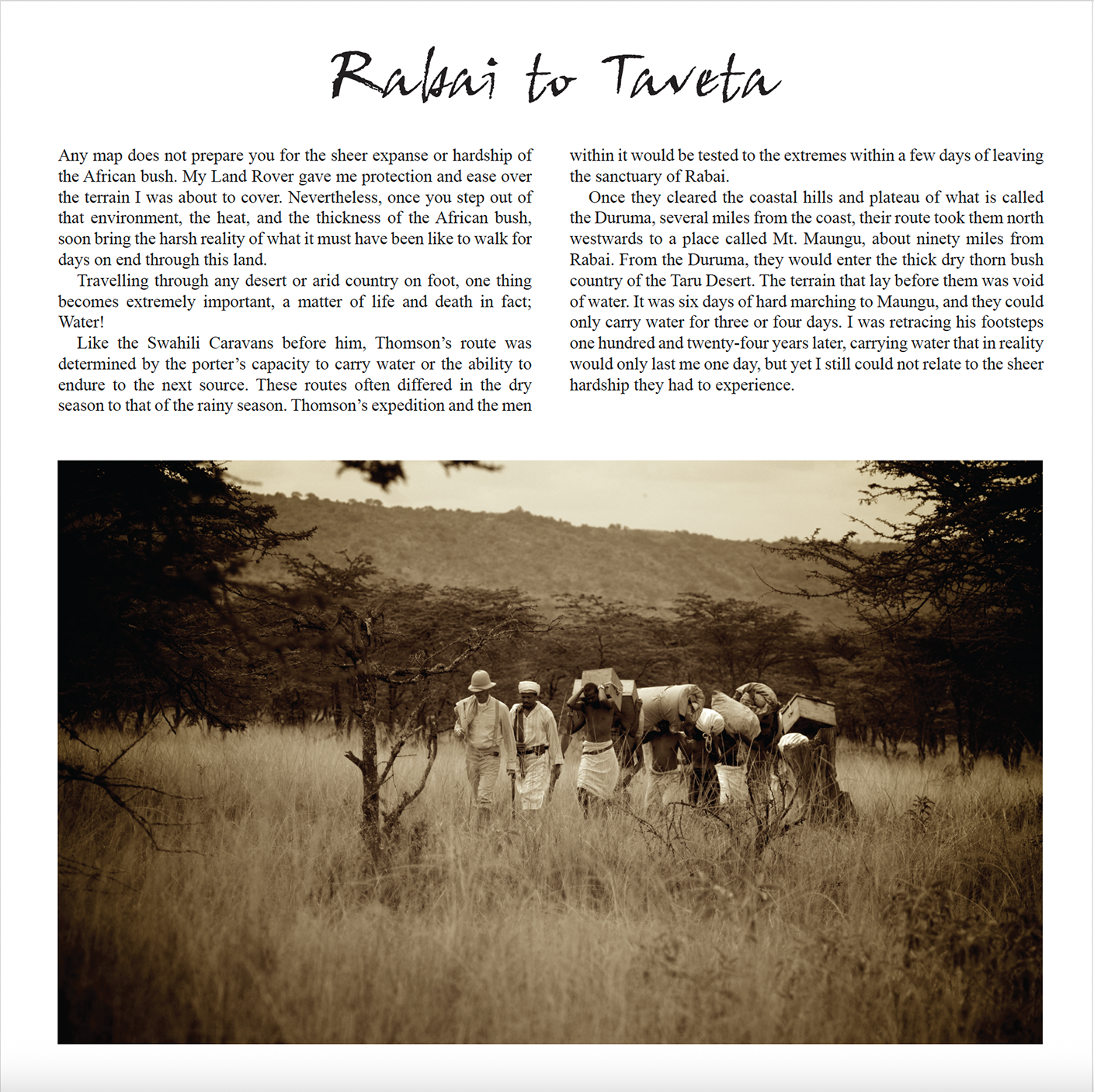
My mechanism for this is to retrace the route of an early explorer, Joseph Thomson, who was commissioned by the Royal Geographical Society to find a route from the East African coast to the great Lake Victoria Nyanza in the central highlands. I will make a comparison of East Africa as it was in 1883 and how it was in 2006, using Thomson's own account of his journey, Through Masailand. Published in 1885, it describes in detail the terrain he crossed, the tribes he met, and the flora and fauna he observed. One hundred and twenty-three years is a microsecond of evolution, but through this small window in time it was possible to observe the precise effects that nature and man, both colonial and indigenous, have had on the ecological and sociological structures. This unique window of time provides ample examples of ecological issues, positive and negative, from which a clear understanding of the environment and its issues can be observed.